From the author
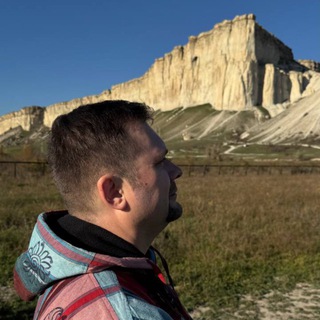
Welcome to my site!
My name is Sergey. Let me start with why it appeared at all. It was meant not as a shop window but as a control mechanism — I needed to see what the algorithms are doing right now, to keep the reporting in one place and to notice failures in time. Later it became clear that the experience might be useful to more than just me, and the pages were opened up. But first things first.
How it started
I opened my first account in 2003, right after finishing university, with Alpari. My experience is not limited to currencies: I traded equities, futures and options on the Moscow Exchange through BCS. Today only the algorithms trade — I write them.
Why I stopped trading by hand
I studied seriously and for a long time. And I did learn — I mastered more than one trading system, understood the mechanics, knew what I was doing and why. It did not help.
The problem was not knowledge. I am a compulsive gambler. I could follow the rules for a week and then undo all of it in a single evening: hold too long, add to a loser, enter outside the system. The knowledge did not go anywhere — it simply stopped mattering.
For a long time I would not admit it, looking for the cause in the system, the broker, the chart markup — anywhere else. When I finally did admit it, things got easier: the problem had a name, and something could be done about it.
Where the approach came from
First came the courses, free and paid — that period stretched over about ten years. What I took from it was a simple thought: mastering a trading system in a general stream takes an enormous amount of time, and without mentoring — with someone checking your work and pointing out mistakes — it is practically impossible. From 2016 I switched to one-to-one training — directly with the authors of the strategies, people who traded their own systems rather than retelling someone else’s. Five such courses in all. The experience accumulated, and at some point it became clear that all of it could be written as rules and calculated. That is how the idea of the first algorithm appeared.
The thinking behind my algorithms today came from options — real, exchange-traded ones. Not to be confused with so-called “binary options”: the two share nothing but the word. With real options you cannot work by guessing direction — you have to count probabilities, distributions and expectancy, and decide not by where “the market will go” but by whether the risk pays for itself over a long series.
Between the idea and a working bot there used to stand programming, and for many that was an impassable barrier. Today, with AI, writing a trading robot has become feasible even for someone far from code. My own competitive programming from school years came in unexpectedly handy — I never thought it would be of use again.
Why algorithms
The solution is simple to state and slow to build: take myself out of the process. Not “learn discipline” — I had tried that — but make my participation in trades technically impossible. An algorithm has no emotions: it does not chase losses, does not move a stop, does not enter outside its rules.
The manual trading experience was not wasted — all of it went into the code. What I came to understand about markets over those years now executes without me. The work changed completely: instead of watching charts I test hypotheses against history, measure drawdowns and discard whatever fails the checks.
Why there is so much about risk here
That is where the slant of these pages comes from: there is far more here about risk, probabilities and drawdowns than about returns. Not because returns do not matter, but because they are a consequence. If a system does not fall apart on a bad stretch, the profit will come on its own; if it does fall apart, no percentages will help.
So I show not only the best case but the worst one too: how deep the account sank, how long it lasted, what would have happened in a different order of trades, and at what point trading stops under the rules. To my mind, that is what is worth looking at before making a decision.
Who this is for
A straight answer: for investors who already have a portfolio and deliberately keep a share of high-risk assets in it. Not for someone looking to replace a salary or to double their last thousand. Such a person will have a bad time here, and it is better said now than six months from now.
The reason is arithmetic, not snobbery. Return and drawdown are the same thing seen from two sides: a portfolio that made 983% over five years was at one point worth 22.6% less than the day before, and went as long as 68 days without a new high. For someone holding this as part of an allocation, that dip is a working episode. For someone holding it as everything, it is a reason to quit at the bottom.
And quitting at the bottom is the main risk of a subscription — it lies with the subscriber, not with the strategy. That is why the horizon here is measured in years rather than months: a month is not enough for the system to show either its best or its worst. If you are ready to sit through a three-month dip without touching the position, we are talking about the same thing.
What I do with my own money
I trade the same algorithms with my own funds — this is not a shop window for other people’s money. A prototype has been trading since April 2026 on a small account, and since June its history has been public — the W2W signal on MQL5. In September I launched my first portfolio of algorithms on Tickmill so that it starts gathering live statistics — they are open on the Results page. I do not plan to switch it off: the whole point is for the system to run a long distance without my interference.
Tickmill is not a random choice: I have worked with them for over ten years and have tried many others. What decided it was their approach to copy trading and their reputation.
Why I opened the strategy to others
A fair question, and in an investor’s place I would ask it first: if the system works, why does the author need someone else’s money. Point by point.
Copying does not take anything away from my own result. Subscribers’ trades are executed on their own accounts and do not share my volume. The limit beyond which copies start to interfere with execution has been calculated and stated: around $10 million of total subscriber capital, with the numbers on the How to join page. Below that line a new subscriber changes nothing, either for me or for the others.
The fee is taken from profit and only from profit. It is a second income on top of the first, not a replacement for it: my own money runs on the same algorithms, in the same trades. Interests line up exactly where they should — I earn when you earn.
And a third reason, less obvious. Being public is a discipline. When the numbers are published every week and every trade sits in a separate file, you can no longer quietly change the rules after a bad run. For someone with my history that matters: I removed myself from the trades with code, and a public account removes the temptation to come back to manual control.
Why the subscription is open from the first day of live trading
The usual advice goes like this: wait a year of live trading, then decide. I am not going to pretend that year would have proved anything.
A live account answers three questions, and all three quickly. Whether the program does exactly what the calculation says. What execution actually costs — spread, slippage, gaps. Whether any of it breaks on restarts, dropped connections and in the minutes around news. The answers show up in weeks, not in a year.
And to the question “what happens next” a live account gives no answer at all. The market can change character tomorrow — equally after five years of calculation and after a year of real trading. A year of live trading does not reduce that risk: it merely adds a sixth year to the five, four times shorter than the rest.
One exception, stated honestly. Five years of calculation are data I had seen when I was selecting instruments and settings; even with honest selection a trace of that remains. A live week is data nobody has seen. That is exactly why the account is public and the figures are taken from it by an outside service rather than by me. And it is exactly why there is no point in waiting: what live trading can verify, it verifies at once; the rest is waiting for the sake of waiting.
One last thing
I will keep this site going whatever the account turns out to show. Bad weeks will stay in plain view alongside the good ones — otherwise everything written above about risk is worth nothing. If the system ever hits its stop threshold, that will appear here too: with the date, the figures and a post-mortem.
If questions remain after all of the above, write to me and I will answer. Questions of the “what happens if…” sort are the most useful ones: a good half of what is on these pages exists because somebody asked and no answer was to be found.
And about the name. w2w stands for The Way to Wealth, Franklin’s 1758 pamphlet, the source of the epigraph on the first page. He promised good luck to the diligent, so I will wish you not luck but diligence: a stop on every trade, thresholds set in advance, and the patience to let a long distance do its work. The rest will be visible here — in figures, every week.
Sergey